


Why LED Load Resistors Are Needed ?
LED load resistors are needed to ensure that LED bulbs function correctly in circuits originally designed for incandescent bulbs, in automotive applications.
The primary reason is that LEDs draw significantly less current than traditional bulbs. This low current can confuse the vehicle’s onboard electrical system, which expects the higher current draw of incandescent bulbs, resulting in issues like hyper-flashing turn signals, dashboard bulb-out warnings, or LEDs not functioning properly.
LED load resistors are needed for several key reasons in automotive lighting applications, especially when upgrading to energy-efficient LED bulbs.
Prevent Hyper-Flashing: When LED bulbs, which draw much less current than incandescent bulbs, are installed, vehicle flasher units often interpret the reduced load as a bulb failure. This triggers hyper-flashing (rapid blink rate of turn signals). Load resistors draw additional current, restoring the normal flash rate.
Eliminate Dashboard Errors: Modern vehicles have onboard computers or CANbus systems that monitor light circuits and expect a specific current draw for each bulb. Low LED current can trigger “bulb out” or error warnings. A load resistor simulates the original bulb’s power consumption so that the system recognizes the LED bulb as a proper load.
System Compatibility: Some cars may disable certain lighting or comfort features, such as cruise control, if they detect a “fault” in the system caused by LEDs. By correcting the electrical load with resistors, all features continue to function as intended.
Protect LEDs from Surges: In some cases, load resistors can help absorb excess voltage spikes in the circuit, offering an added layer of protection for sensitive LED electronics.
How They Work?
Load resistors are wired in parallel with the LED bulb. They safely absorb (and dissipate as heat) enough current to simulate the electrical load of an incandescent bulb. This tricks the circuit into functioning as if an original bulb is still present, thus avoiding compatibility problems.
How Load Resistors Prevent Hyper Flashing
– Current Balancing: The load resistor is installed in parallel with the LED bulb, adding enough resistance to the circuit to match the current draw expected from an incandescent bulb.
– Signal Correction: By increasing the total load, the vehicle’s flasher unit or module detects appropriate current and stops the hyper flashing warning.
– Mimics Original Bulb: The effect is comparable to restoring the circuit’s “weight” so the system believes a standard bulb is present, ensuring normal blink rates.
How Do LED Light Load Resistors Work?
LED light load resistors work by simulating the electrical load of traditional incandescent bulbs in automotive and other lighting systems. LEDs consume significantly less power than incandescent bulbs, and this low current draw can cause vehicle systems to misinterpret the LED as a failed bulb, resulting in hyper flashing, dashboard error messages, or malfunctioning of dimmers and circuits.
To resolve this, a load resistor is connected—typically in parallel with the LED bulb—to artificially increase the current draw in the circuit. This fools the vehicle or system’s electronics into detecting the expected load, restoring normal operation (such as correct blink rates for turn signals) and eliminating error signals.
The resistor dissipates extra electrical energy as heat according to Ohm’s law and the power formula (P=V2/R). Choosing the correct resistor wattage and resistance is critical to ensure safety and effectiveness; load resistors for automotive LED systems are usually high wattage and designed to withstand significant heat.
Summary Table: LED Load Resistor Operation
| Feature | Description | Typical Value |
|---|---|---|
| Purpose | Mimics incandescent bulb load for system compatibility | Simulates 21W bulb |
| Mounting | Parallel to LED circuit | Near signal lamp |
| Wattage Rating | Power handled and dissipated as heat | 10–50 W |
| Resistance Value | Sets current draw | 6 Ω, 8 Ω, 10 Ω |
| Heat Dissipation | Requires enclosure or mounting on metal | Aluminum/ceramic body |
LED load resistors are essential for retrofitting LEDs into legacy systems without redesigning the entire circuitry, ensuring correct system behavior and reliability.
Practical Implementation
The resistor absorbs extra current and dissipates heat, so correct mounting is necessary. Common values for automotive turn signals are around 6 ohms and 25 watts. One resistor per LED bulb is typical for reliable results.
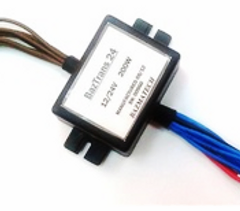
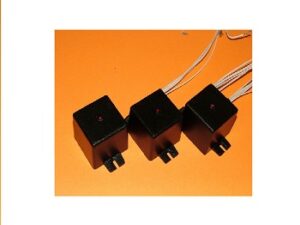
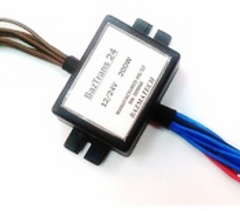
The Gambeks smart load resistor module
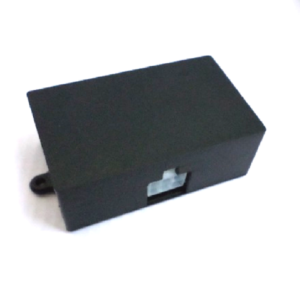
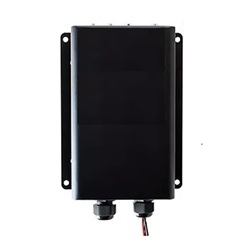
The Gambeks smart load resistor module is an advanced, non-heating solution designed for automotive turn signal LED upgrades. It uses electronic circuitry to simulate the current draw of incandescent bulbs without the heat generation typical of traditional load resistors. Take a look comparison between the standard led load resistor and our smart electronic dummy load module
Gambeks smart LED load resistor module key Features:
– Electronic Simulation: It electronically mimics the load expected by the vehicle’s onboard computer, ensuring error-free operation without generating significant heat.
– Direct Replacement: The module replaces standard “dummy resistors” or load resistors, allowing easy and compatible LED upgrades in automotive lighting circuits monitored by vehicle computers.
– Heat Management: Unlike passive LED load resistors that dissipate power as heat and require mounting on a radiator, the SLM module remains cool during operation, reducing installation complexity and fire risk.
– Error Correction: It prevents common LED retrofit problems such as dashboard error messages and hyper flashing by accurately simulating the electrical load of original bulbs.
Read more about the Gambeks SLM smart load resistor module (detailed technical specifications)
The Gambeks smart load resistor module advantages:
The Gambeks smart load resistor module lineup includes several models designed to electronically simulate the load of incandescent bulbs in automotive LED turn signal circuits. Each module is non-heating and does not require a radiator for installation
The modules use an electronic solution to simulate load, avoiding heat generation and installation complexity.
SLM221xx models suit standard vehicles; SLM421xx models fit multi-channel or commercial vehicles where more signals require load simulation.
This lineup provides reliable, error-free LED upgrades for both 12V and 24V automotive electrical systems.
Gambeks Smart Load Resistor Module List
The Gambeks Smart Load Resistor Module lineup includes innovative, non-heating solutions designed to replace traditional load resistors in automotive LED lighting applications. These modules provide CANbus/OBC error correction and solve hyper-flashing issues, supporting both 12V and 24V vehicle systems
| Model | Voltage | Channels Replaced | Replacement Capacity | Application |
|---|---|---|---|---|
| SLM22112 | 12V | 2 | 2 x 21W LED load resistors | Standard automotive turn signals |
| SLM22124 | 24V | 2 | 2 x 21W LED load resistors | Buses, trucks, 24V vehicle systems |
| SLM42112 | 12V | 4 | 4 x 21W LED load resistors | Extended automotive signaling |
| SLM42124 | 24V | 4 | 4 x 21W LED load resistors | Extended 24V signaling (commercial) |
All modules are designed for direct parallel installation with LED bulbs and do not require any heat sink or radiator due to their non-heating electronic design.
Variants are available to support both 2-channel (left/right signal circuits) and 4-channel (all signal circuits) automotive applications.
These modules ensure error-free operation, standard blinking rates, and enhanced installation safety for both 12V and 24V vehicles.
The Gambeks Smart Load Resistor modules offer reliable, maintenance-free solutions for modern automotive LED upgrades
